A history 157 years in the making.
1869-2026
A Historic Cincinnati Church Reimagined as a Wedding & Event Venue
Time tested the church in profound ways. Fierce storms, devastating fires, and changing neighborhoods left their mark. Yet again and again, the building endured—restored through the determination of its community and sustained by its purpose as a place of gathering, service, and hope.
By the late 20th century, the building continued to serve those most in need, known for its open doors and weekly meals. Even when it eventually fell silent, its story was never finished—only waiting…
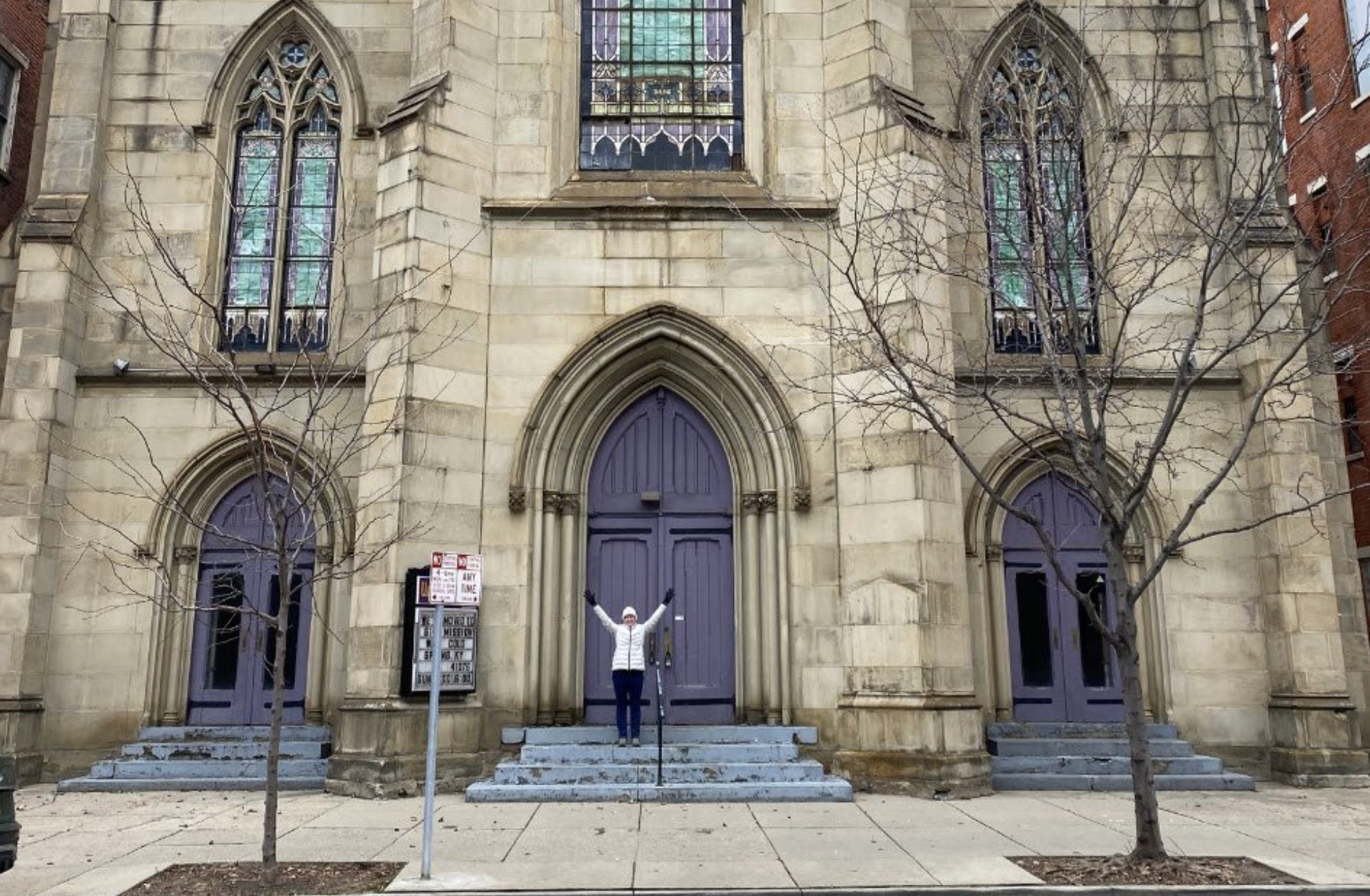
A New Chapter Begins on West Ninth Street
In 2024, the building was purchased by architect and preservationist Sheri Scott of Springhouse Architects, who saw not just a structure, but a legacy worth honoring. With deep respect for its history and architecture, the church has been carefully reimagined as a one-of-a-kind wedding and event venue in Cincinnati—a space where history sets the scene for life’s most meaningful moments.
This has always been a place for promises.
Now, it’s a place to make new ones.
Where Nearly Two Centuries of Cincinnati History Meet Modern Celebration
Long before it became a place for first dances and candlelit vows, this iconic Ninth Street church was already shaping Cincinnati’s story. Built in the heart of the city’s historic district, this Gothic landmark has stood witness to generations of gatherings—faith-filled, civic-minded, and deeply human. Today, it begins a new chapter as a thoughtfully restored Cincinnati wedding and event venue, honoring its past while welcoming modern love stories.
A Legacy Built on Vision, Craftsmanship & Community
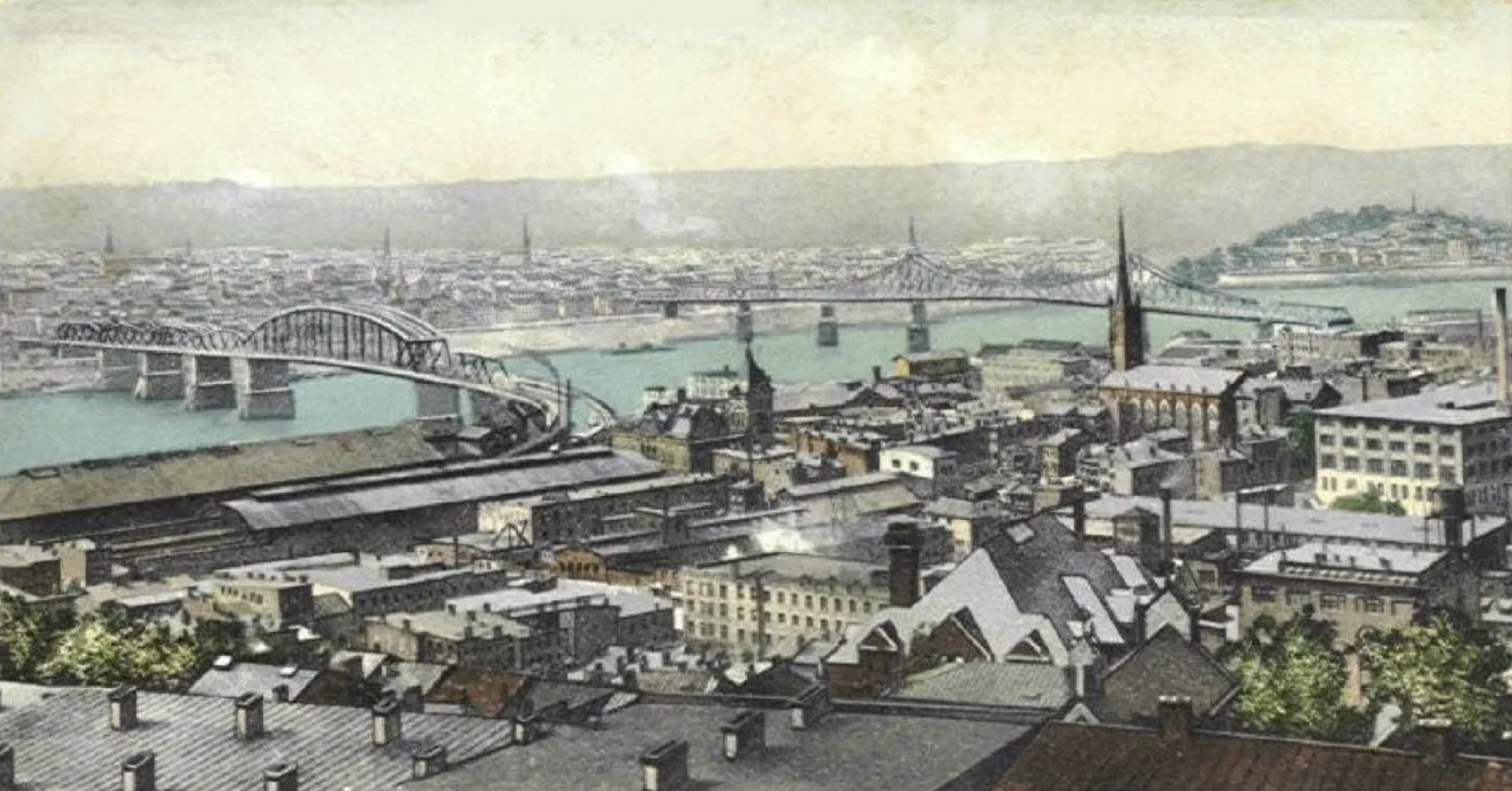
From its earliest days, this corner of West Ninth Street has been a place of ambition and belief. In 1837, when Cincinnati was still defining itself, the lot was praised as “one of the most handsomest in the city.” As industry, innovation, and community blossomed around it, so did the vision for a church that would reflect both faith and architectural excellence.
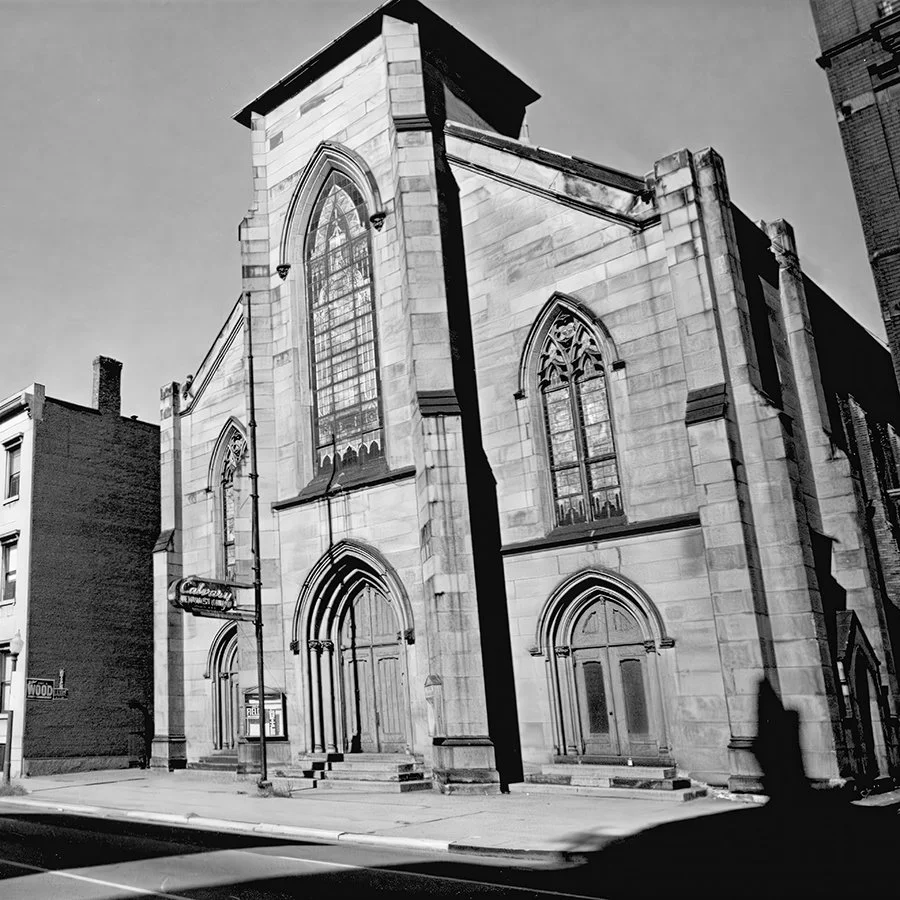
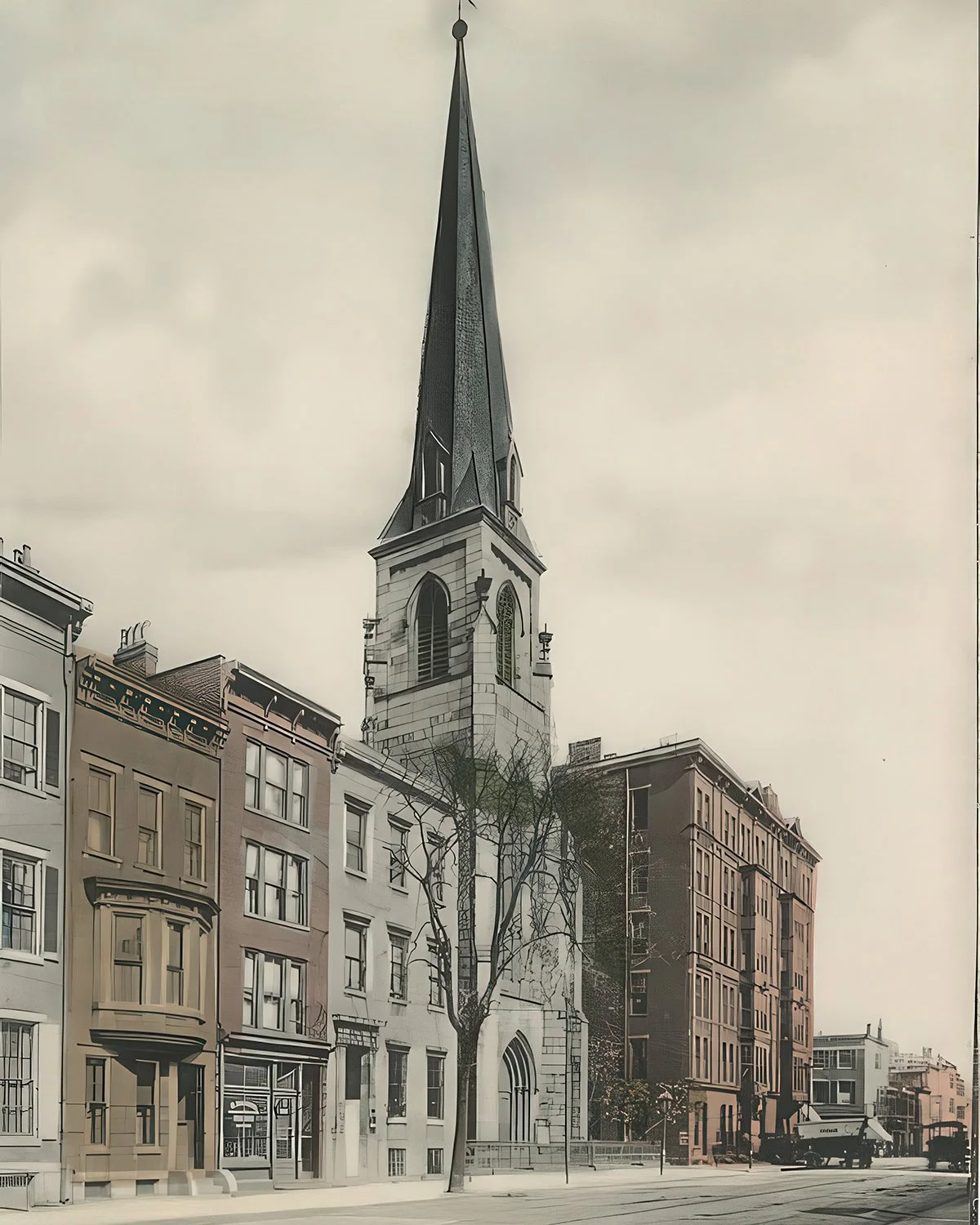
Rebuilt on the eve of the Civil War, the church’s soaring Gothic design, grand auditorium, and refined proportions quickly earned admiration citywide. Newspapers called it “the most perfect specimen of pure Gothic architecture in the city”—a distinction that still echoes through its vaulted spaces today.
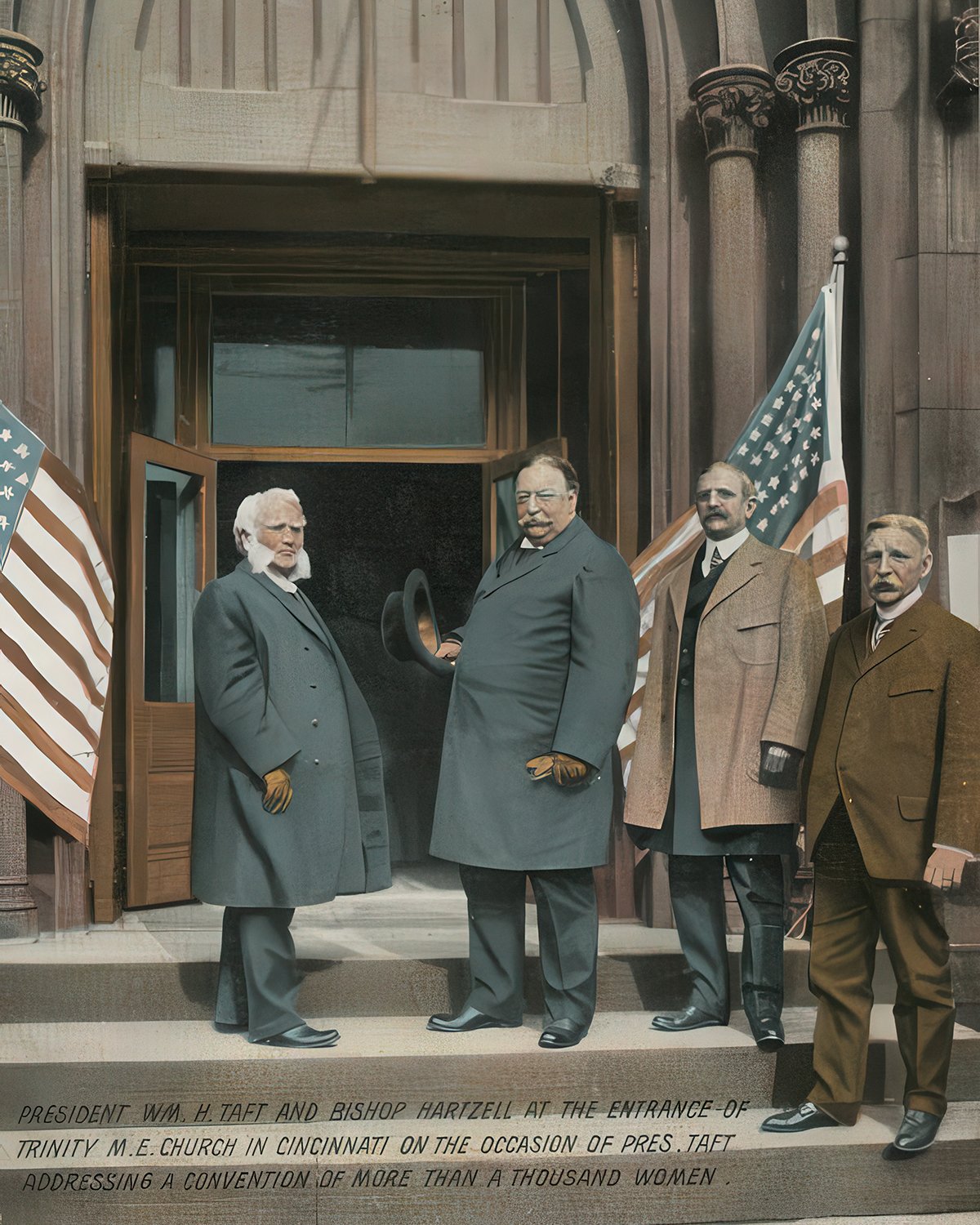
A Gathering Place for Leaders, Reformers & Visionaries
Throughout the late 19th and early 20th centuries, the church drew together some of Cincinnati’s most influential citizens—bishops, doctors, business leaders, and reformers—many of whose legacies continue today.
It welcomed leaders connected to institutions still woven into daily life, from Procter & Gamble to Jacob Bromwell, from national medical innovators to champions of social reform. It was also home to pioneering organizations devoted to education, humanitarian aid, and women’s leadership, including causes supported by First Lady Lucy Webb Hayes.
In 1910, the church became a national stage when President William Howard Taft addressed more than 1,000 women gathered within its walls—a moment that forever linked the building to the broader American story.
Endurance, Resilience & Renewal - A New Chapter
Time tested the church in profound ways. Fierce storms, devastating fires, and changing neighborhoods left their mark. Yet again and again, the building endured—restored through the determination of its community and sustained by its purpose as a place of gathering, service, and hope.
By the late 20th century, the building continued to serve those most in need, known for its open doors and weekly meals. Even when it eventually fell silent, its story was never finished—only waiting.
In 2024 the building has been saved! Architect and preservationist Sheri Scott of Springhouse Architects, saw not just a structure, but a legacy worth honoring. With deep respect for its history and architecture, the church has been carefully reimagined as a one-of-a-kind wedding and event venue in Cincinnati—a space where history sets the scene for life’s most meaningful moments.
This has always been a place for promises.
Now, it’s a place to make new ones.
A Nostalgic Timeline of a Cincinnati Landmark
1837
A prized parcel on West Ninth Street is purchased for $4,000, described as “one of the most handsomest in the city.” Cincinnati is growing, full of optimism and opportunity.
Late 1830s
The original church is built for $8,000 as industry and innovation take root nearby—including the earliest days of Procter & Gamble.
1859–1860
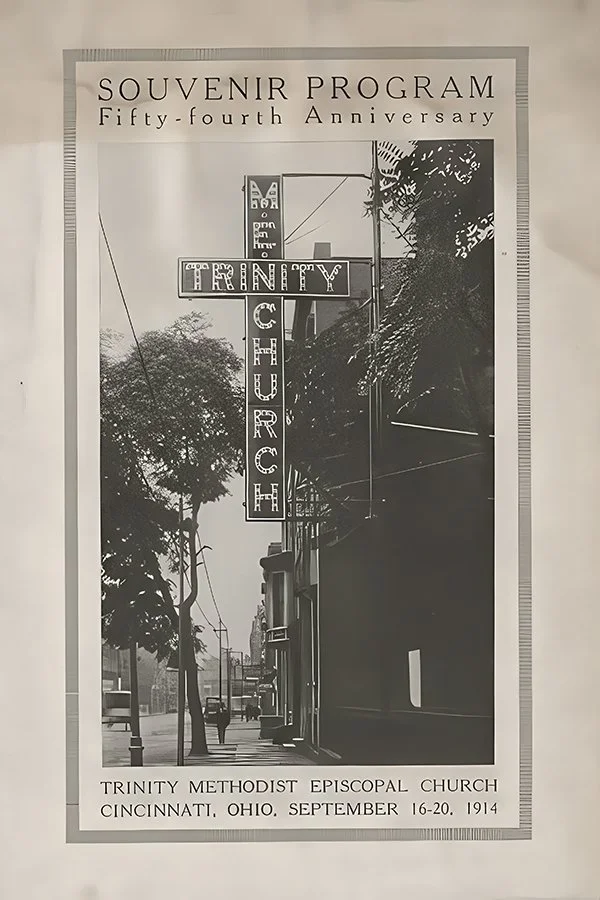
As the Methodist community grows, the church is rebuilt into a grand Gothic structure. The cornerstone is laid on December 17, 1859, and the new 14,000-square-foot church opens its doors on September 9, 1860—just months before the Civil War.
1866–1869
The church becomes a center for progress and compassion, housing the Freedmen’s Aid Society and later the Women’s Foreign Missionary Society, supporting education and opportunity during a changing America.
Early 1900s
The church draws Cincinnati’s civic leaders, innovators, and reformers. National figures—including bishops, physicians, and industrial leaders—shape both the city and the nation from within its walls.
1910
President William Howard Taft speaks to over 1,000 women gathered at the church, marking one of its most notable public moments.
1915
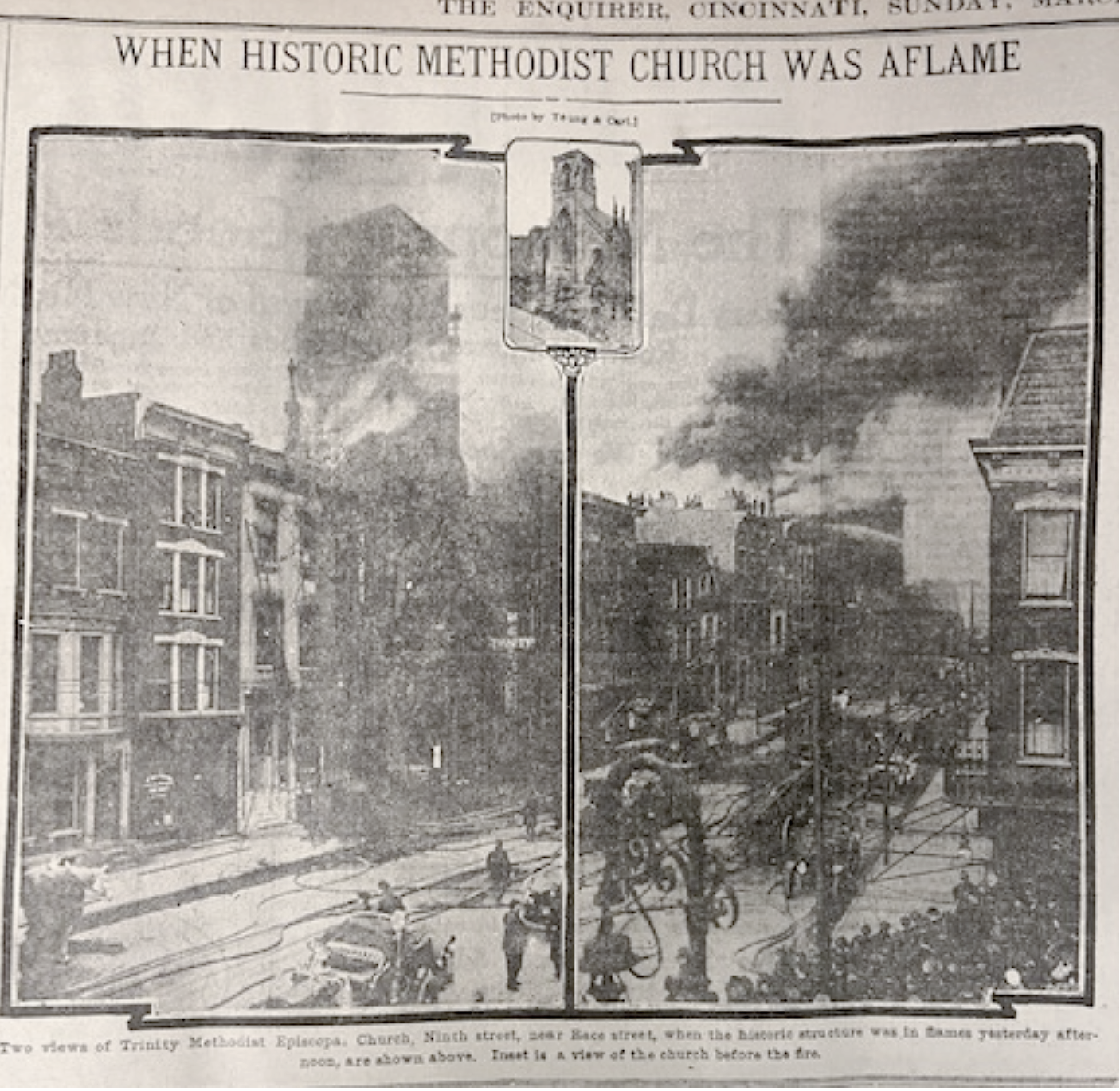
A historic windstorm devastates Cincinnati, destroying the church’s steeple and altering its skyline forever.
1916
Two fires test the building’s future. Thanks to determined fundraising—led largely by the Trinity Young Women’s Club—the church is restored and reopened.
1970
The building enters a new chapter as United Christian Fellowship, serving its neighborhood with compassion and a renowned Friday Feeding Program.
1996
Another fire damages the building, challenging a congregation already stretched thin.
2007–2018
Uptown Church breathes new life into the space through renovations and continued worship.
2024
After years of quiet, the building is lovingly restored and reimagined by Springhouse Architects, opening a new chapter as a historic wedding and event venue.
2025
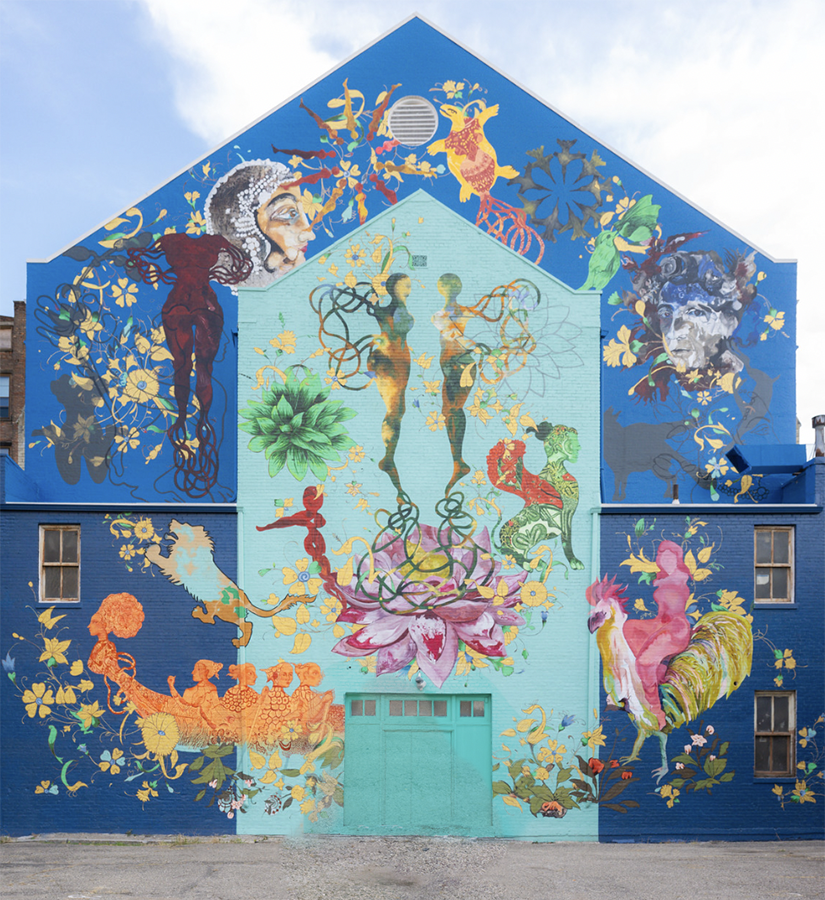
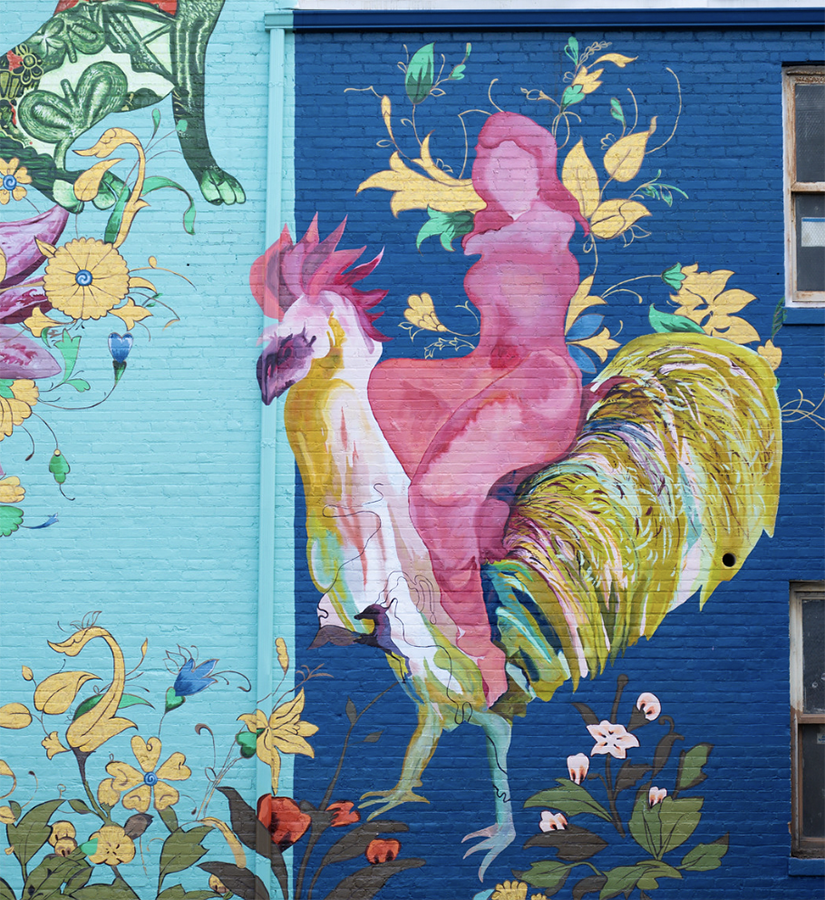
The back of the building gets the honor of having a mural painted by New York City based artist, Shahzia Sikander. THe mural project was a combined effort with Cincinnati Art Museum and Artworks Youth Program. Mayor of Cincinnati, Aftab Pureval attended the dedication.
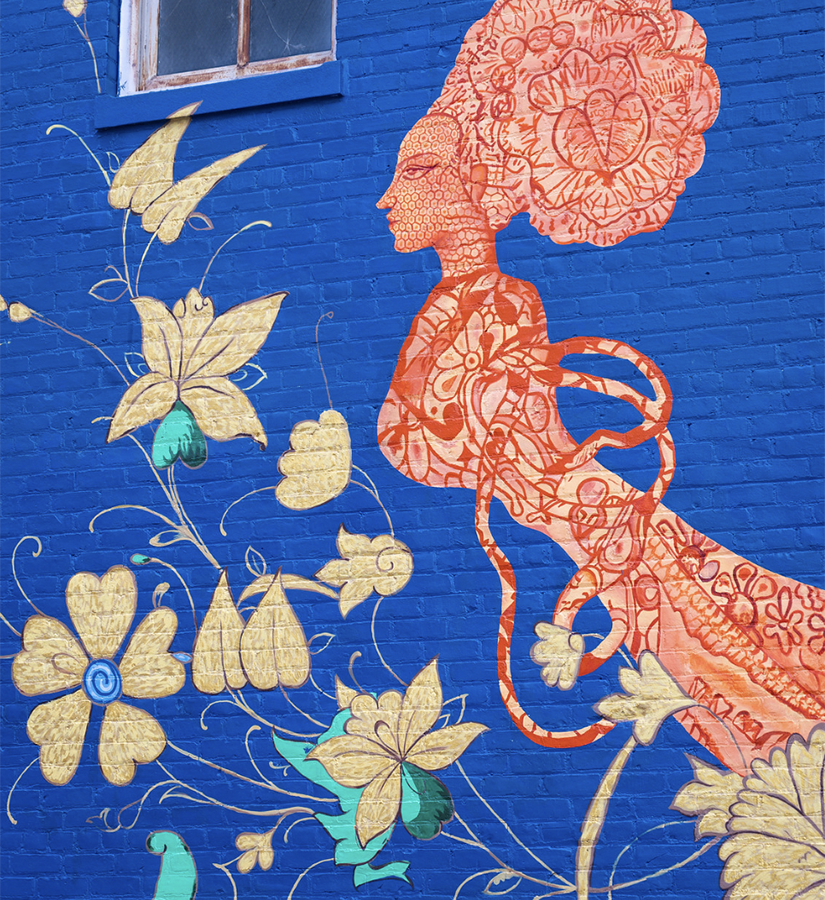
“Commons” by Shahzia Sikander